
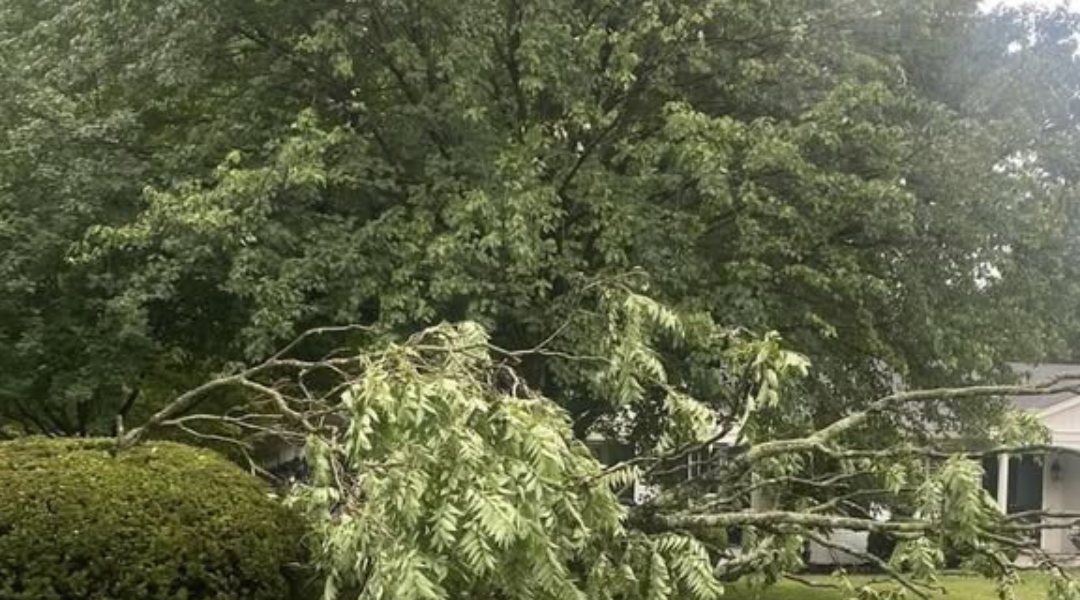
If you have watched a storm roll across your yard and wondered whether that leaning oak would still be standing by morning, you are not alone. Kentucky sits in an unpredictable severe weather pattern, and late summer often brings some of the year’s strongest wind and hail. A tree that has looked fine for years can fail without much warning once the wrong storm arrives. This guide covers what puts a tree at risk, how to spot warning signs early, and what to do if a tree in your yard does not make it through the night. Understanding storm damage tree service in Louisville, KY, before you need it can save you a stressful scramble later.
Why Louisville, KY Sees High Storm Damage Risk in Late Summer
Louisville and Jefferson County see their most active thunderstorm stretches between spring and late summer. According to the National Weather Service’s Louisville office, a storm is classified as severe once it produces gusts above 58 miles per hour or hail an inch or larger, and the strongest straight line winds in a Kentucky storm can top 100 miles per hour. That is enough force to snap large limbs, uproot mature trees, and bring down power lines in seconds. For a tree with a hidden weakness, that kind of storm can mean the difference between minor limb loss and a trunk coming down on your roof or fence.
This is why late summer is a smart time to take stock of the trees on your property rather than waiting until after the next warning is issued. A tree that survived last year’s storms is not automatically safe this year, especially if it has grown heavier or lost roots to nearby construction. Taking a closer look now, while the weather is calm, gives you options that are not available once a storm is overhead.
What Makes a Tree More Likely to Fail in a Storm?
Not every tree faces the same level of risk once the wind picks up. Some species and situations are simply more prone to failure than others, and knowing what to look for helps you prioritize which trees on your property deserve a closer look first. The three factors below cover most of what an arborist checks during a walk through your yard.
Weak or Damaged Root Systems
A tree is only as stable as the roots holding it in the ground. Compacted soil, recent construction, and utility trenching can all damage a root system over time. University of Kentucky forestry researchers note that storm damage ranges from a few broken branches to a tree being fully overturned, and the ones most likely to uproot usually had compromised roots beforehand. If you have done any digging near a mature tree recently, it is worth a second look.
Structural Defects and Included Bark
Some trees grow with a weak point where two large limbs meet the trunk at a narrow angle, trapping bark between them instead of forming a strong union. This included bark creates a seam that can split apart under wind loading before the rest of the tree shows any visible stress. Cracks in the trunk, old wound cavities, and fungal growth near the base are further signs of decay that weaken a tree’s ability to flex during high winds.
Overgrown or Unbalanced Canopies
A canopy that has grown heavy on one side, or a tree that has not been thinned in several seasons, catches more wind resistance than a well-maintained one. That extra surface area acts like a sail during a storm, adding stress to the trunk and roots with every gust. Regular pruning keeps a canopy balanced and reduces the load a tree has to withstand when the weather turns.
How Can You Tell If a Tree on Your Property Is at Risk Before a Storm Hits?
You do not need to be a certified arborist to catch the early warning signs of a tree in trouble. Start by walking your property and looking for a trunk that leans more than it used to, cracks running along the bark, or large dead branches in the canopy. Mushrooms near the base of the trunk, sawdust piles from insect activity, and soil that has visibly lifted on one side of the root zone are all signs that something below the surface may already be failing.
None of these signs automatically mean a tree has to come down. What they do mean is that the tree needs a closer look from someone who can tell a cosmetic issue apart from a structural one. A lean that has been there for years and grown its own upward curve is often a different situation than a sudden lean that appeared overnight. If you notice any of these signs, it is worth having the tree evaluated before the next round of severe weather rather than after.
Why Professional Tree Service Catches Storm Damage Risks a Homeowner Can’t
The defects that cause the most damage during a storm are frequently the ones you cannot see from the ground. Cracked branch unions, hidden decay inside the trunk, and root damage below grade rarely announce themselves with an obvious clue. This is why property owners across the region turn to certified arborist services in Louisville, KY before storm season rather than after a limb has already come down.
An ISA-certified arborist assesses each tree’s structure, species-specific tendencies, and proximity to your home or power lines, then walks you through exactly what they found. Sometimes that means a round of strategic pruning to reduce wind load. Other times it means recommending removal for a tree that has passed the point where pruning alone would help. Either way, you get a clear, honest answer and the chance to make the decision on your own timeline rather than in the middle of an emergency.
What Should You Do If a Storm Damages a Tree on Your Property?
If a tree does come down, your first priority is keeping everyone away from it until you know it is safe. Downed trees can still be under tension from surrounding branches or power lines, and a tree resting against your home may be holding up debris that shifts the moment it is disturbed. Do not attempt to cut or move a fallen tree yourself, especially near an electrical line.
Once everyone is safe, call for emergency tree service in Louisville, KY right away. A licensed and insured crew can assess the situation, remove the tree safely, and take steps to prevent further damage while you sort out next steps. Because storm-related tree emergencies can happen at any hour, having a company you trust already in mind makes a stressful situation considerably easier to manage.
Does Homeowners Insurance Cover Storm-Damaged Trees?
In most cases, yes, though the details depend on your policy and the cause of the damage. If a tree falls due to a covered peril such as high winds and damages your home, garage, or another insured structure, your homeowners policy typically covers the structural repair and at least a portion of the tree removal cost. Coverage tends to be more limited, or may not apply at all, if the tree falls without hitting anything insured, or if it was already dead before the storm.
Filing a claim after a tree falls can feel overwhelming on top of everything else you are dealing with, which is why insurance claims support for tree damage is worth asking about when you call for removal. A team that documents the damage properly and provides clear, itemized information for your adjuster can make the difference between a smooth claim and a frustrating back and forth. It is always worth reviewing your specific policy with your agent too, since coverage details vary by provider.
Simple Steps to Protect Your Trees Before the Next Storm Rolls Through
You do not have to overhaul your entire yard to meaningfully reduce your storm risk. Start with a slow walk around your property to look for the warning signs covered earlier, paying close attention to any large tree positioned near your home, driveway, or a spot where your family spends time outdoors. Keep an eye on the weather forecast during peak storm months, and take loose outdoor furniture and equipment out of a tree’s fall zone when severe weather is expected.
Most importantly, know who to call before you need them. A free, no-cost estimate and a straightforward conversation about what your trees need can turn a source of anxiety into a plan you feel good about. Trees add real value and beauty to a Louisville property, and with the right care, most of them can weather a rough storm season just fine.
Give Your Trees a Fresh Start This Storm Season
Storm season does not have to mean crossing your fingers every time the wind picks up. Knowing the warning signs of a tree at risk, understanding when a professional assessment makes sense, and having a plan in place if a tree comes down all go a long way toward protecting your home and your peace of mind. Whether you have a tree that has you worried right now or simply want an experienced set of eyes on your property, New Leaf Tree Service is a local, family-owned team ready to help. Reach out today to schedule your free estimate and take one more thing off your storm season worry list.