
Maybe you noticed it this summer. The ash tree in your backyard leafed out thin, a few limbs at the top stayed bare, and now, in early fall, it looks worse than its neighbors. You may be wondering if it is worth saving, or if ash tree removal is the safer choice before winter weather sets in. Across Louisville, that question is showing up in a lot of yards.
The emerald ash borer, a small metallic green beetle, has spread across Kentucky and has killed or weakened a large share of the ash trees in the region. A dying ash is not only a loss of shade. As it dries out, the wood becomes brittle, and brittle wood does not hold up well to ice, snow, and strong winter winds.
This guide will help you figure out whether your ash can still be treated, why fall is a smart time to act if it cannot, and what a safe removal looks like. The goal is simple: peace of mind for you and your property before the first winter storm.
What Is Happening to Louisville’s Ash Trees?
Ash trees were once one of the most common shade trees in Louisville neighborhoods, parks, and along streets. That popularity is exactly why the emerald ash borer has had such a large impact.
A Pest That Works From the Inside
The adult beetle is small and easy to miss. The real damage comes from its larvae, which tunnel just under the bark. Those tunnels cut off the tree’s ability to move water and nutrients between the roots and the canopy. According to the University of Kentucky Entomology overview of emerald ash borer in Kentucky, the insect was first found in the state in 2009 and typically kills an infested ash within three to five years.
Why So Many Trees Are Failing Now
Because infestations build quietly for several years before a tree shows obvious decline, many Louisville ash trees that looked fine a few seasons ago are now thinning, dying back, or already dead. By the time a homeowner notices, the tree is often further along than it appears.
How Do I Know If My Ash Tree Has Emerald Ash Borer?
Most homeowners do not spot the beetle itself. Instead, they notice changes in the tree. Here is what to look for.
Thinning at the Top of the Canopy
Decline usually starts in the upper crown. Leaves become sparse, and small branches at the top stay bare while the lower canopy still looks green. This pattern is one of the most common early warnings.
D-Shaped Holes in the Bark
When adult beetles emerge, they leave small exit holes shaped like the letter D, about an eighth of an inch across. They can be hard to see from the ground, but they are a strong sign of infestation.
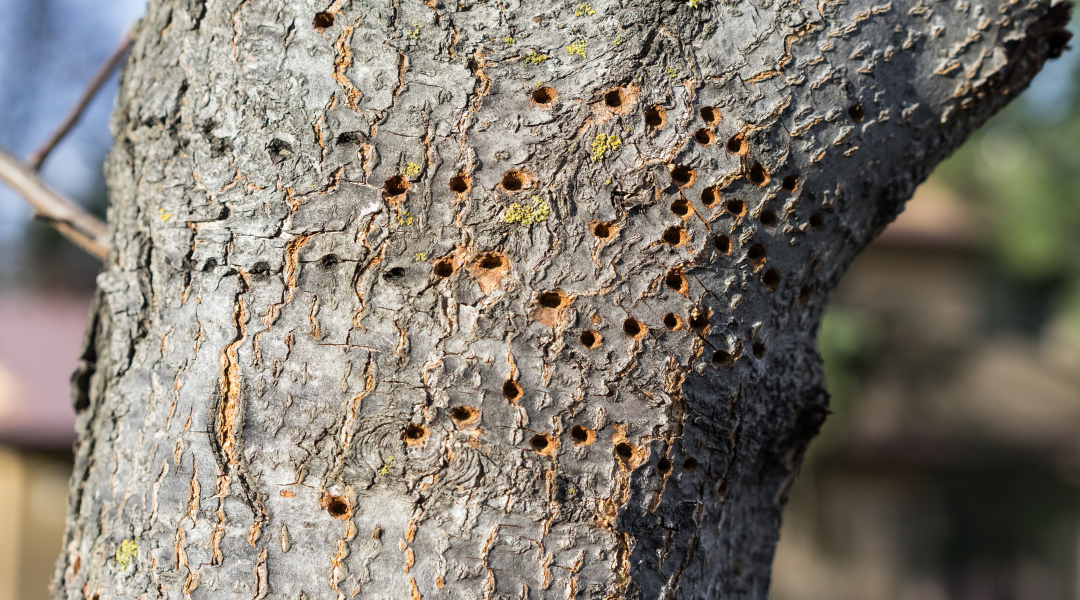
Woodpecker Activity and Bark Splits
Woodpeckers feed on the larvae under the bark. If you see patches where the outer bark has been flaked off, leaving lighter spots on the trunk, woodpeckers may be telling you something is wrong. Vertical cracks in the bark can also appear over tunnels.
Sprouts Along the Trunk
A stressed ash will often push out clusters of new shoots low on the trunk or at the base. It is the tree trying to survive after the upper canopy has started to fail.
Can an Infested Ash Tree Be Saved?
Sometimes, yes. It depends on how far the damage has gone.
Ash trees that are still healthy, or only lightly affected, can often be protected with insecticide treatments applied by a trained professional. University of Kentucky guidance describes several options, including soil drenches, trunk sprays, and trunk injections, with injections typically repeated every other year. Treatment works best as prevention or in the early stages of decline.
Once a large portion of the canopy has died back, treatment is much less likely to help. At that point, the tunnels under the bark have already done serious damage, and the tree may not have enough living tissue left to recover. Continuing to pay for treatment on a tree that is past saving rarely makes sense.
An ISA-certified arborist can assess the canopy, the bark, and the overall structure and give you a plain recommendation. Our tree and plant healthcare service is designed for exactly this kind of evaluation, so you can make a decision based on the tree’s real condition rather than a guess.
Why Fall Is the Right Time for Ash Tree Removal
If your ash is dead or too far gone to treat, the timing of removal matters more than many homeowners realize.
Dead Ash Becomes Brittle Fast
Ash that has been killed by the borer tends to dry out and lose strength more quickly than many other species. Limbs can snap without warning, and whole tops can break out of the tree. That makes a dead ash more dangerous to climb and to work around the longer it stands.
Winter Weather Adds Stress
Louisville winters bring a mix of wind, freezing rain, and the occasional heavy snow. A coating of ice adds a lot of weight to branches that are already weak. Removing a dead ash in the fall means it is not standing over your roof, driveway, or fence when that weight arrives.
Safer Conditions for the Crew
Removing a tree while its wood still has some strength gives our crew more options. A tree that has been dead for years may be too brittle to climb safely, which can make the job more complex. Acting sooner often keeps the removal simpler and safer.
Less Impact on Your Landscape
Fall removal also lets you plan replanting for the right season. Once the ash is gone, you can choose a new tree for the space with plenty of time to prepare.
What Does Ash Tree Removal Involve?
Knowing what to expect takes a lot of the stress out of the process. Here is how a typical removal works with our team.
A Free, On-Site Assessment
We come to your property, look at the tree, and evaluate what is around it: your home, power lines, fences, and landscaping. You get a detailed quote at no cost to you. The cost of any removal depends on the size and location of the tree, how complex the job is, and how easy it is to reach.
Choosing the Safest Method
For open yards, a tree may be taken down in sections. For large, brittle, or hard-to-reach ash trees near a structure, our crane services allow us to lift sections away without putting a climber into a weakened canopy. The method is chosen for safety first.
Careful Work Around Your Property
Our crew is trained, licensed, bonded, and insured. We protect your lawn and landscaping as much as possible and work in a planned sequence so nothing comes down where it should not.
Cleanup and Next Steps
When the job is done, we clean up the debris. If you want the stump removed too, stump grinding can be added so the space is ready for a new tree or lawn. You can learn more about the full process on our tree removal page.
Should I Remove a Dead Ash Tree Myself?
For most homeowners, the answer is no. A dead ash is one of the more unpredictable trees to cut. Brittle wood can break in directions you do not expect, and falling limbs can cause serious injury or property damage.
Even small ash trees can be tricky once they have died, because the wood does not bend the way living wood does. If the tree is near your house, a neighbor’s property, or any utility line, it is a job for a professional crew with the right equipment and insurance.
If you are unsure whether your tree is dead or just stressed, start with a professional assessment. It costs you nothing, and it gives you a clear picture of your options. From there, the decision about timing and next steps stays in your hands.
Protect Your Property Before the First Winter Storm
Ash trees across Louisville are under real pressure from the emerald ash borer, and a dying ash only gets more hazardous with time. The key takeaways are straightforward. Watch for thinning at the top, D-shaped holes, and heavy woodpecker activity. Treat healthy or lightly affected ash trees early. And if your tree is dead or too far gone, plan removal in the fall before ice and wind put that brittle wood to the test.
Ready to turn over a new leaf with the trees on your property? Our ISA-certified arborists will assess your ash tree and give you a clear, honest recommendation. Contact New Leaf Tree Service or call (502) 419-9899 to schedule your free estimate today.